Introduction to the Voyager Missions
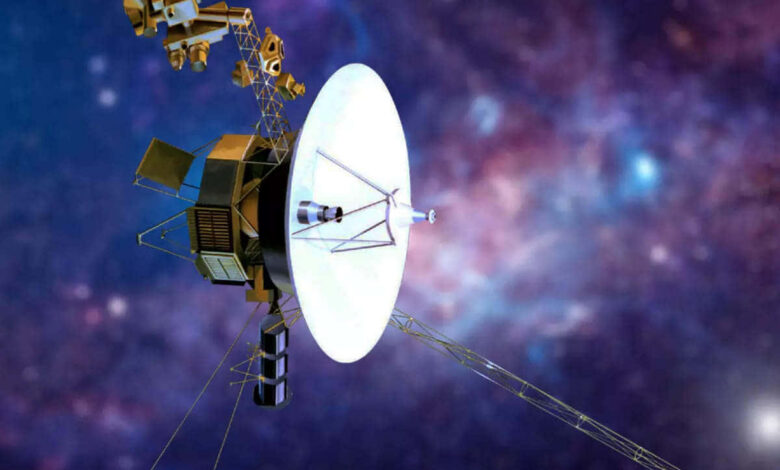
Since their launch in 1977, NASA’s Voyager 1 and 2 have journeyed further into the cosmos than any other human-made objects. Currently, they are navigating the vast, mysterious terrain beyond our solar system. These missions have not only expanded our understanding of the outer planets but also continue to transmit invaluable data from beyond the heliopause. Furthermore, as these spacecraft venture deeper into space, they serve as essential touchstones for understanding high-velocity travel and the intriguing implications of time dilation—a core principle of Einstein’s theory of relativity.
This article explores the landmark travels of Voyager 1 and 2, the relativistic effects suggesting spacefarers might age differently than those on Earth, and the technological leaps required for human interstellar travel. Consequently, we examine the stark realities and the ambitious dreams of reaching another star system within a single lifetime.
The Pioneer Missions of Voyager 1 and 2
In the ongoing quest to explore the cosmos, humanity has sent numerous probes beyond our planetary neighborhood. The Voyager probes, launched over four decades ago, remain the undisputed pioneers of interstellar exploration. However, as we look toward the future of manned interstellar travel, we must confront the limitations of light-speed travel, human longevity, and our current propulsion technologies.
One of the most fascinating predictions of relativity is time dilation, where time slows down for an object in motion relative to an observer at rest. This implies that astronauts on high-speed voyages would age more slowly than people on Earth. While the Voyager probes move at speeds far below the speed of light, their long journeys provide a practical, real-world framework for these complex physical principles.
Scientific Breakthroughs in Deep Space
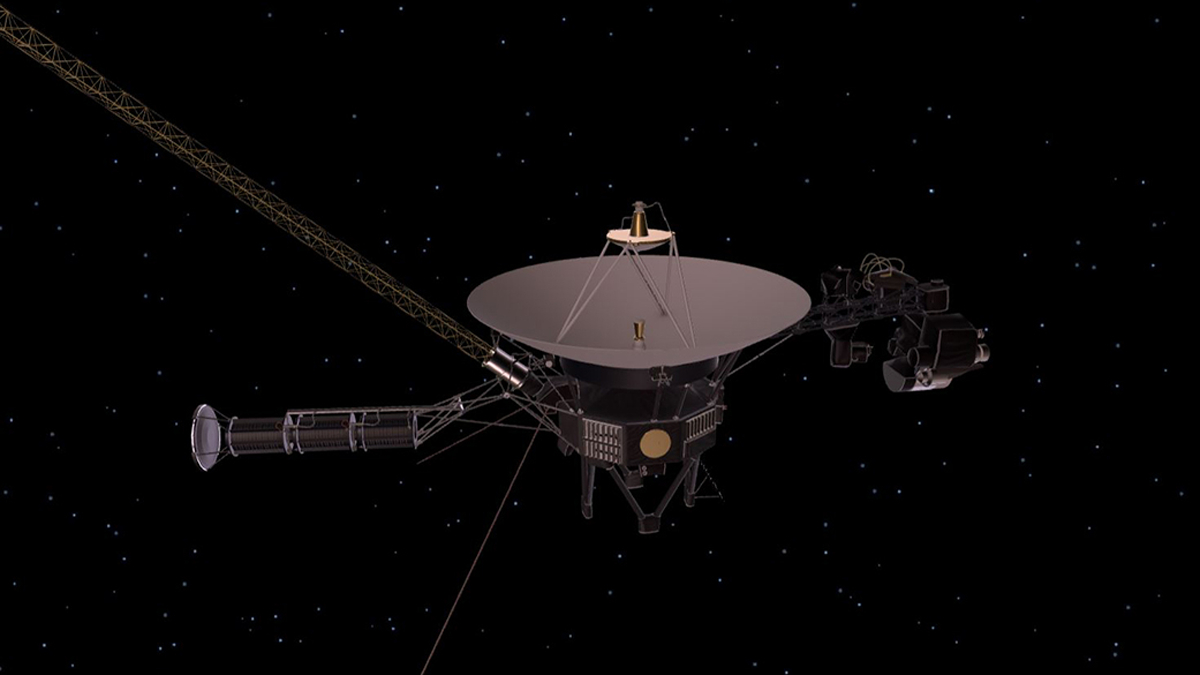
The ongoing journey of Voyager 1 and 2 is a testament to human engineering. Currently, Voyager 1 is over 14 billion miles from Earth, with Voyager 2 following at approximately 11.5 billion miles. Their sustained functionality has far exceeded original mission expectations, providing profound insights into the conditions of interstellar space.
Crucially, these missions have helped verify aspects of relativistic physics. By demonstrating measurable time dilation—where onboard clocks run slightly slower than those on Earth—they align with the predictions of general relativity, offering a practical glimpse into the mechanics of our universe.
Understanding Time Dilation and Relativity
Time dilation posits that time is relative rather than absolute. As an object approaches the speed of light, time for that object slows down significantly compared to an observer remaining at rest. Although the effects on the Voyager probes are minuscule due to their relatively low speeds, the principle remains a cornerstone for future interstellar mission planning. For instance, if a spacecraft were to travel at a significant fraction of light speed, the discrepancy in aged time between the crew and Earth would be dramatic.
Case Study: A Journey to Proxima Centauri
To illustrate the effects of relativistic travel, consider a future mission to Proxima Centauri, located 4.24 light-years away. If a spacecraft could reach 10% of the speed of light, the journey would take roughly 42 years from Earth’s perspective. However, due to the effects of time dilation, the crew would experience a slightly shorter duration. At even higher velocities, a crew could potentially complete a round trip while aging only a fraction of the time that passes on Earth, making interstellar travel theoretically possible within a single human lifespan.
The Challenges of Future Interstellar Travel
The implications of time dilation are profound, suggesting humans could reach distant stars without violating physical laws. Nevertheless, the hurdles remain immense. We require propulsion systems capable of near-relativistic speeds, advanced shielding against cosmic radiation, and life-support systems that can function for decades. Current technology is still in its infancy regarding these monumental requirements.
Conclusion
The Voyager missions have expanded our cosmic horizons and grounded theoretical physics in reality. While interstellar travel remains a distant dream, advancements in propulsion and our deepening grasp of relativity continue to bring that dream closer. Until then, the Voyagers remain our silent ambassadors in the dark, lighting the path for future generations of explorers.